24 Sep 2026
Organizers: Laura Bernardi, Fiona Friedli, Myriam Girardin, Julia Sauter, Magdalena Spasic
LIVES Working Group on Family Dynamics
******
Session 3: LGBT+ Parents and the Law. Transnational Perspectives on Kinship and Social Status
Lesbian, gay, bisexual, and trans people have long faced not only rejection from their families but also exclusion from forming legal and legitimate families of their own. Since the end of the twentieth century, however, family law has evolved considerably in Europe and the Americas. Discrimination based on sexual orientation and gender identity is now prohibited, and the right to privacy helps to acknowledge sexual and gender minorities and their families. Drawing on in-depth empirical research conducted in France, Canada, and Chile with parents, legal practitioners, and activists, this webinar explores how the gradual, partial, and often controversial recognition of LGBT+ family rights has transformed the social status of this group. It shows how legal ties and family bonds build, differentiate, and hierarchize social groups, and therefore may contribute to social change.
Through two key concepts —social status and the “kinship matrix”— this presentation ties together gender and sexuality studies, the sociology of family, and socio-legal studies. Social status captures the individual and collective dimensions of social position, as well as its symbolic and material components. The "kinship matric" produces a gendered dichotomy between women and men based on bodies, desires, and family bonds. It conceptualizes the normative system that has marginalized LGBT+ people, and that their mobilizations and practices in turn seek—sometimes successfully—to transform.
This cross-continental research leads to the conclusion that legalizing LGBT+ parents reduces their experiences of everyday injustice: it allows more people to envision themselves as partners and parents, to form a family, and to have the latter acknowledged as such. Legal status also reduces interactional uncertainty. While the risk of othering has not disappeared, legal entitlements diminish its consequences. Legal recognition also provides security for the future and potential family crises (illness, death, separation, etc.). Yet, these gains in social status tend to be conditioned by parents’ reflexivity about their minority status, by their conformity to the coupledom norm, and to relatively valued class, gender, and race positions. Relatives, professionals, and strangers often remind them of majority norms, such that their status gains remain fragile.
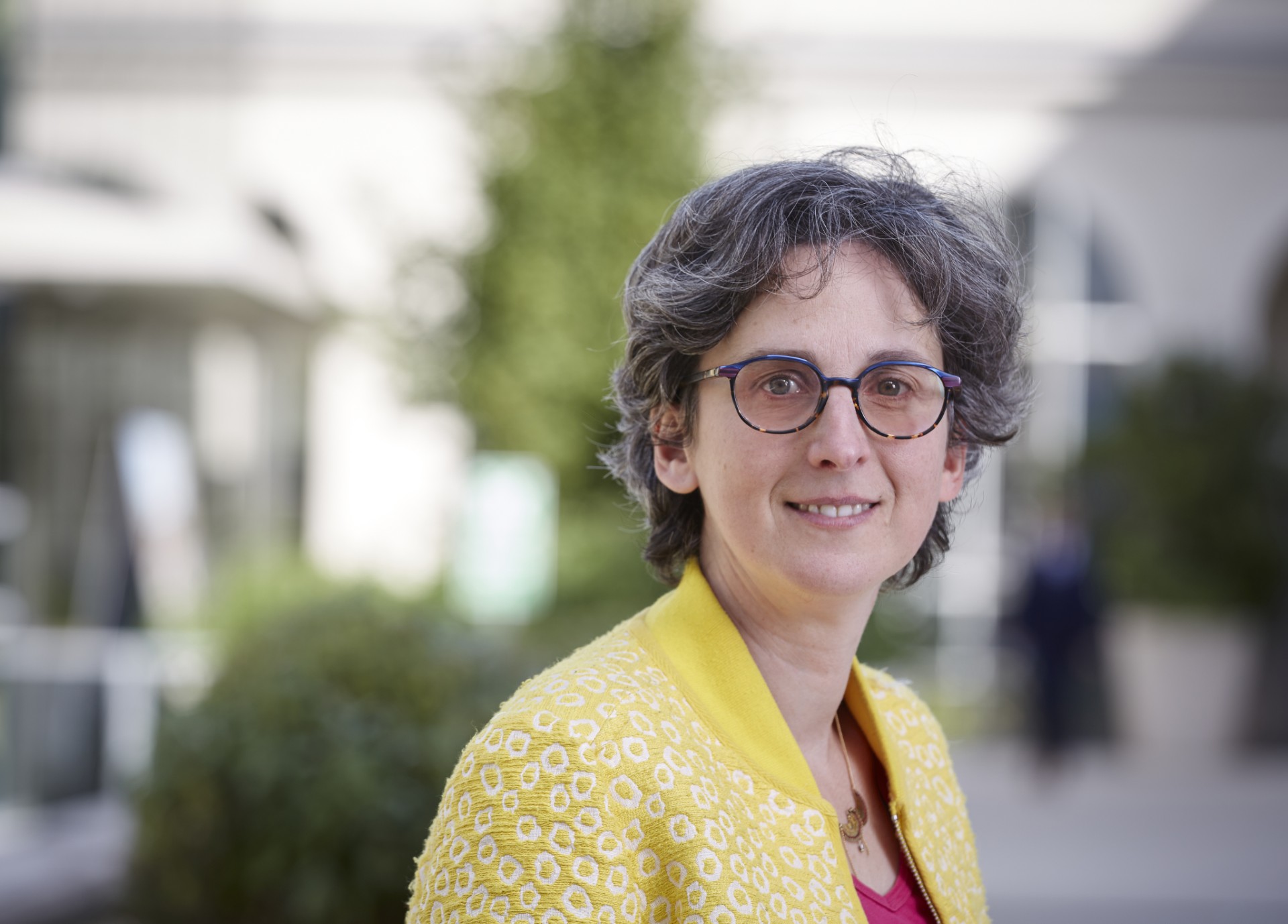
Speaker: Emilie Biland-Curnier — professor of sociology at Sciences Po, in Paris (France), and a research associate at the French Institute for Demographic Studies (Ined)
Venue:
- Thursday, 24 September 2026
- 13:00-14:00
- Online: The Teams link will be provided upon registration (please fill out the form below)
- Click here to register
Questions? Contact us at: osfamily@unil.ch
This event is part of the webinar series "FAMILIES IN FLUX: CONTEMPORARY DYNAMICS ACROSS DISCIPLINES" organised by the LIVES Working Group on Family Dynamics
Upcoming sessions:
November 2026 — Joint session with DReMSS (date and time TBD)
Speakers and topics will be announced soon.